 |


Xinyue Antenna Cover
Qiniu
I. Raw Material Description
Medical-grade composite TPE P3870 elastomer blended modified pellets are two-component thermoplastic elastomer composites free of vulcanization and latex. They contain no PVC or phthalate plasticizers, and are specially engineered for flexible protective sleeves of medical equipment, antenna shielding components, GEON Perfo…
Base Medical TPE Matrix:Medical-grade styrenic thermoplastic elastomer (SEBS substrate). It has passed ISO 10993 biocompatibility testing with negative results for skin irritation and cytotoxicity. Featuring low extractables and low odor, it poses no sensitization risk upon prolonged skin contact with human bodies. It delivers insulation, flexibility, and excellent resistance to repeated bending, complying with medical device safety standards. Compatible with ethylene oxide (EO) sterilization and low-temperature disinfection.
Modifying Auxiliary Agent: P3870 (Maxelast P3870):General medical/electronic-grade composite TPE elastomer modifier. Serving as a soft-phase toughening, wear-resistant and encapsulating modifying component, it improves rubber-like surface feel, tear resistance, friction resistance and melt flow performance of materials. It can be directly overmolded onto rigid PP/ABS substrates with outstanding insulation performance, suitable for manufacturing precision electronic antenna shielding parts. Compliant with RoHS and environmental standards for polymer materials used in medical devices.
Core Advantages of Composite Material:Replacement for conventional rubber: No vulcanization required, high injection molding efficiency, and recyclable sprues/runners for secondary use.Free of latex protein, eliminating the risk of medical latex allergy.Insulating and non-interfering with radio frequency signals, ideal for antenna signal transmission environments.Resistant to medical alcohol and disinfectant wipe wiping; no surface whitening or extractable precipitation occurs.
II. Raw Material Performance Parameters
| General Test Item | Test Standard | P3870 |
| Color | Visual Inspection | Gray |
| Density (g/cm³) | GB/T 16583-1996 | 1.25 |
| Hardness (Shore A) | GB/T 531.1-2008 | 70 ± 3 |
| Tensile Strength (MPa, min) | GB/T 528-2009 | 8.0 |
| Elongation at Break (%, min) | GB/T 528-2009 | 700 |
| Permanent Set at Break (%, max) | GB/T 528-2009 | 6 |
| Tear Strength (kN/m, min) | GB/T 529-2008 | 30 |
| Compliant with RoHS and REACH standards | ||
III. Production Process
Pre-process: Raw Material Pretreatment
1.Drying & Dehydration Moisture-absorbed TPE/P3870 composite pellets tend to form bubbles and silver streaks during high-temperature molding. Dry the pellets in a vacuum drying oven at 75~85°C for 2 hours to control raw material moisture content ≤ 0.03%. Seal and insulate the hopper after drying to prevent secondary moisture absorption.
2.Workshop & Equipment Cleaning Medical components are manufactured in a Class 100,000 clean injection molding workshop. The injection molding machine screw, barrel and molds are made of 304 stainless steel. Medical-grade detergent is used to clean all equipment before production to eliminate cross-contamination from other plastics and oil stains. Molds are polished to reduce product burrs.
Core Injection Molding Parameters (Optimized for thin-walled small antenna sleeves)
Barrel Zoned Temperatures (from hopper to nozzle): Rear zone 165°C, Middle zone 175°C, Front zone 185°C, Nozzle 180°C. The temperature must never exceed 200°C to avoid thermal decomposition of P3870 modifiers and precipitation of harmful small-molecule substances.
Mold Temperature Constant water circulation temperature set to 40°C for rapid low-temperature shaping, minimizing shrinkage and deformation of finished parts and ensuring dimensional accuracy of inner bores in antenna sleeves. Vent grooves are added to molds to prevent trapped air burning on thin-wall sections.
Injection System Parameters, Cooling & Cycle Time Cooling time for thin-walled antenna sleeves: 12~18 seconds. Eject parts only after full cooling to avoid stretch deformation of soft rubber parts during demolding. Total molding cycle: 25~35 seconds for high production efficiency.
Injection pressure: 60~75 bar; medium-low injection speed (30~40 mm/s) to reduce shear heat and preserve elastomer performance
Packing pressure: Primary packing 40 bar for 3s, secondary packing 25 bar for 2s, to eliminate sink marks and maintain dimensional conformity
Back pressure: 8~12 bar; low back pressure minimizes shear degradation of materials
Post-processing Procedures
Demolding Manual or robotic part removal; sprue and runner waste is trimmed and can be crushed for recycling.
Air Cooling & Aging in Clean Workshop Parts rest under air circulation in the clean workshop for 24 hours to release internal stress and stabilize dimensions.
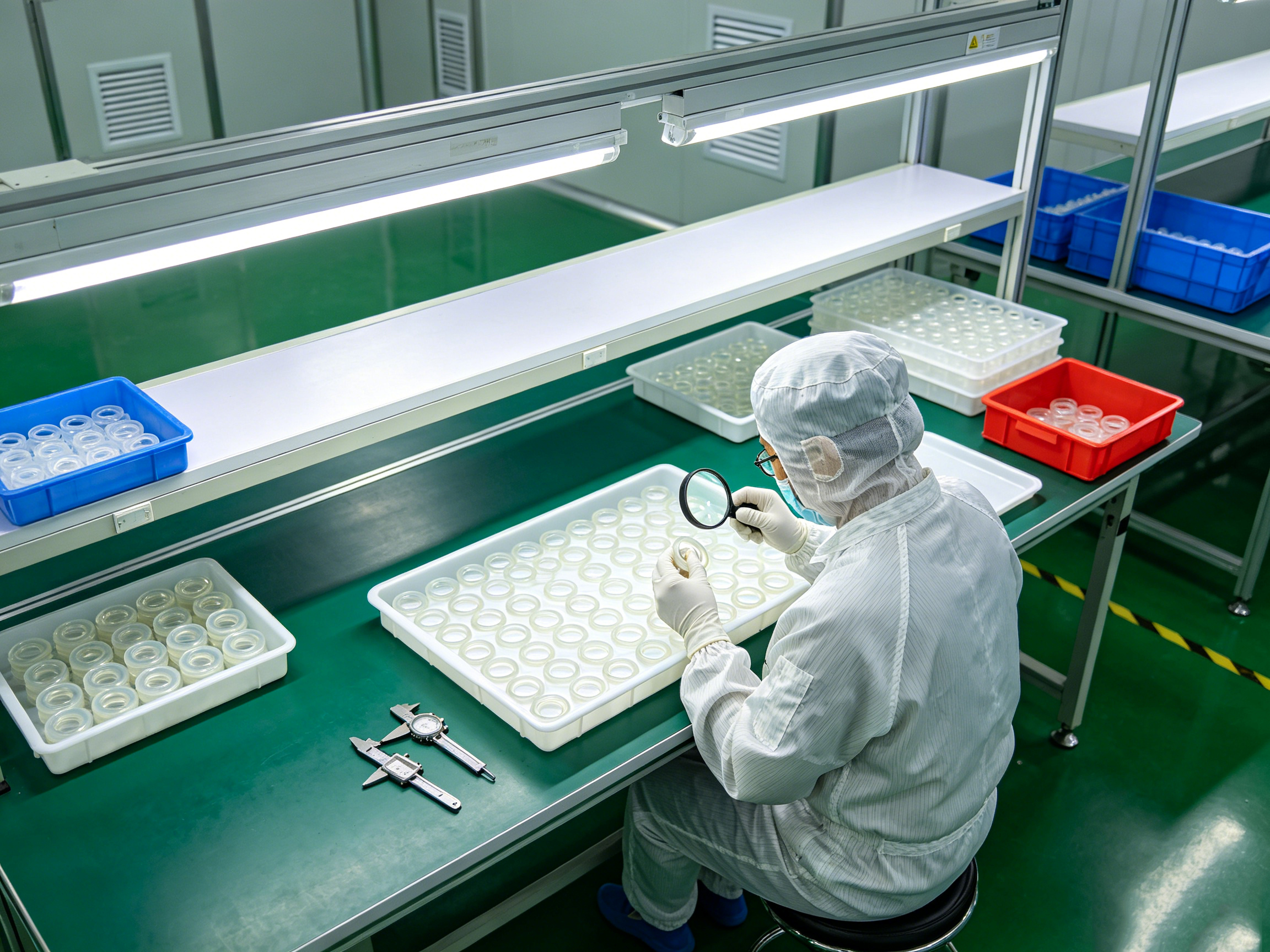
Full Inspection Visual check: no bubbles, damage or color difference; inner diameter pass/fail gauge testing; 500-cycle bending rebound test.
Sterile Packaging Individual packing in sealed PE bags; outer cartons marked with medical component labels. Products are compatible with ethylene oxide (EO) sterilization for hospital use.
IV. Product Application Scenarios
In-hospital Wireless Medical Diagnostic Equipment (Core Application)
(1) Portable ECG / Holter Monitor (Supporting Cardiac Monitoring Devices)
Wireless transmission antennas are built into Holter ambulatory ECG recorders and portable ECG loggers, with this product sleeving the terminals of antenna metal wires. Functions: Insulation protection and shock buffering. The soft rubber fits closely against the patient’s skin during wearable use, eliminating stinging friction from hard metal. It prevents antenna damage when the device is knocked while being carried, and blocks human static electricity from interfering with ECG signal transmission.
(2) Wireless Patient Monitors
Antenna protective sleeves for multi-parameter bedside monitors and neonatal monitors. Hospital beds are frequently moved, pulling cables back and forth. The TPE material features outstanding wear resistance and flex fatigue resistance to extend antenna service life.
2. Rehabilitation & Physical Therapy Medical Devices
External RF antenna protective sleeves for wireless medium-frequency physiotherapy instruments, ultrasound rehabilitation devices and portable vital signs collection equipment. The devices are frequently moved and held by patients; the soft rubber offers anti-slip and scratch-resistant performance, while isolating risks of electric leakage from internal device circuits.
3. In Vitro Diagnostic & Mobile Testing Equipment
Built-in Bluetooth / 4G antenna sleeves for portable blood gas analyzers, wireless blood collection terminals and mobile nucleic acid testing devices. Hospital environments require frequent wiping with alcohol for disinfection; this material resists corrosive disinfectants without aging or cracking.
4. Home Medical Monitoring Devices
External antenna protective parts for household wireless blood pressure monitors, pulse oximeters and sleep monitoring equipment. The material remains non-irritating and odorless during long-term skin contact at home, and resists aging under ambient room temperature conditions.



 注: 建议图片大小150px*50px


